Commercial Charging
PlugStream helps workplaces, shared parking environments, and destination sites choose charging hardware that matches the power available, the drivers expected, and the rollout path ahead.
Compare the new family range in our latest product launch article, or speak to the team about your site requirements.

Commercial Priorities
Commercial EV charging needs more than a product sheet. The right plan has to balance site capacity, user behaviour, install repeatability, and how the system will be run after handover.
Match charger format and output to the supply, the dwell time, the parking model, and the level of scale the site needs now and later.
Plan network access, 4G fallbacks, CT placement, site measurement and support needs before the charger schedule becomes the only conversation.
Open platform thinking, software updates and scalable site intelligence help commercial projects grow without locking themselves into short-term decisions.
Site issues
The charger model matters, but the site constraints usually decide whether the project is easy to operate. Plan the network route, energy measurements and support model before handover.
Use PlugStream Connect with PlugStream Connect Data where Wi-Fi, Ethernet access or IT policy makes the charger network route uncertain.
Resolve with 4GUse PlugStream Flow wireless CT placement to measure from the right electrical location without dragging long visible CT runs back to every charger.
Resolve with FlowUse PlugStream Flow and Flow Link modules where compatible PlugStream chargers need richer local site context and support evidence.
Plan FlowUse PlugStream Sentinel to add managed monitoring, reporting, support snapshots and migration continuity for commercial charging estates.
Review SentinelManaged support
PlugStream Sentinel gives commercial sites a managed support route for monitoring, user management, issue response, reporting and third-party charger migration assessments.
Use Cases
PlugStream is designed to suit a range of commercial environments, from lower-power shared parking to higher-demand three-phase sites.
Support employees and visitors with smart charging that fits office hours, fleet return windows, and energy cost planning.
Deploy chargers that suit multi-user environments where cable flexibility, load management, and clear operating policies matter.
Make on-site charging part of the customer experience while choosing hardware that can scale with rising EV adoption.
Create charging infrastructure that works across staff, visitors, and staged expansion without rethinking the whole platform each time.
Delivery Path
Commercial projects move faster when the technical, operational, and user-facing decisions are aligned early.
Stage 1
Define the site goals: who is charging, how long they stay, and what power is available today.
Stage 2
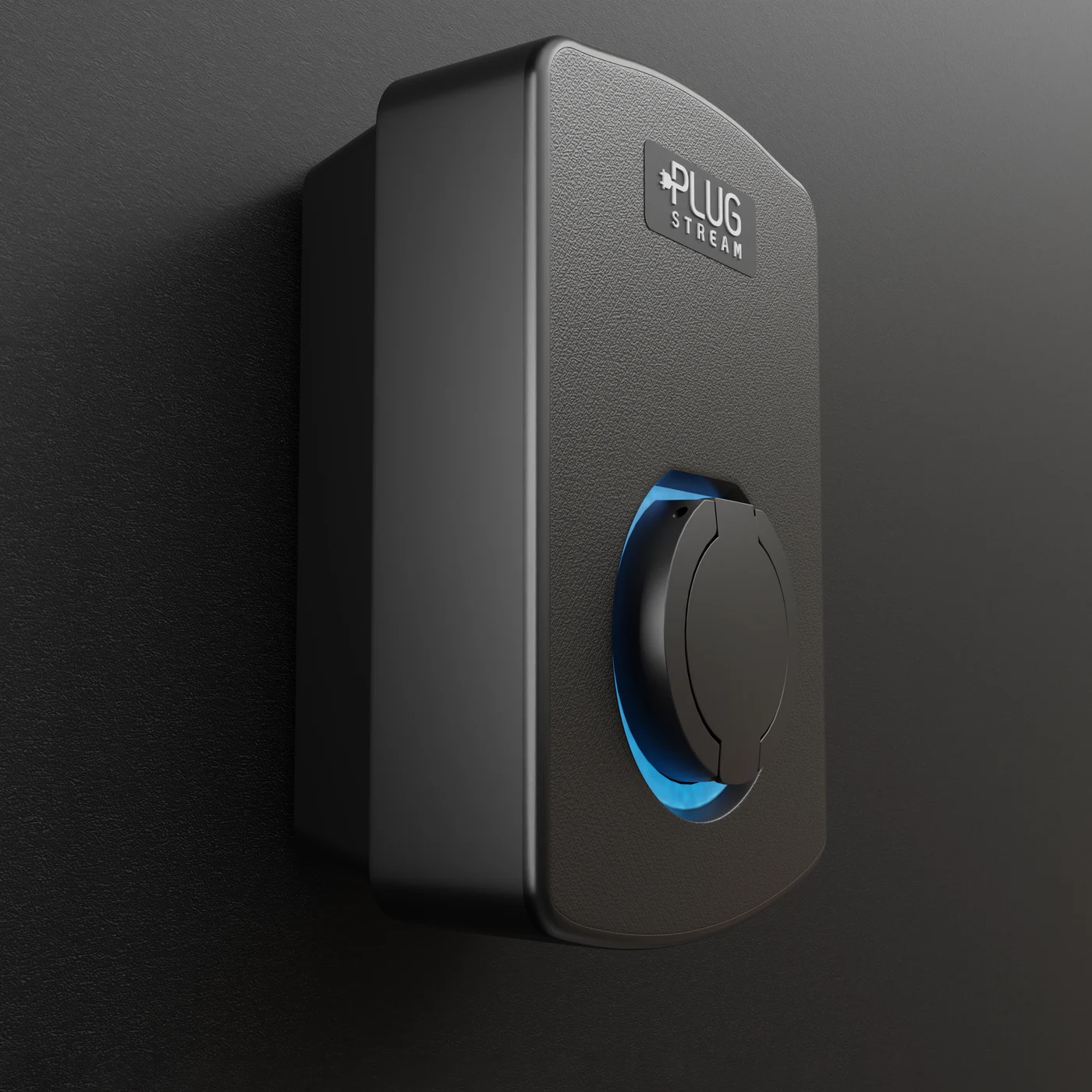
Choose the right product path, from PlugStream 7S for flexible socketed bays to the PlugStream 22 family for higher-demand or three-phase sites.
Stage 3
Plan connectivity, 4G requirements, PlugStream Flow wireless CT placement and site measurement needs before installation starts.
Stage 4
Scope Sentinel support, reporting and migration continuity where the site needs managed evidence after handover.
The PlugStream 22 family is built for higher-demand and three-phase environments, while PlugStream 7S offers a flexible socketed option for shared-use bays and mixed-driver parking setups.
FAQ
Answers for buyers, operators, and installers evaluating the PlugStream range.
It depends on the site. PlugStream 7S can be a strong fit for flexible socketed bays and shared-use parking, while the PlugStream 22 family is suited to higher-demand or three-phase environments.
Yes. PlugStream is designed for commercial rollout planning with load management, PlugStream Connect 4G options, PlugStream Flow site intelligence and installer-friendly commissioning.
Specify PlugStream Connect where Wi-Fi or Ethernet is not suitable, then add the right PlugStream Connect Data plan as part of the quote route.
Include PlugStream Flow where CT placement, solar or storage context, RS485 integration, enhanced load-management context or support evidence matters to the site design.
Commercial buyers need more than a product name and power rating. They need clarity on site fit, rollout approach, support, compliance, and how the system will operate after installation.